Posts Tagged ‘Dale DeGroff’

Rule 37: Fernet Branca Cocktail

Modern Drunkard Magazine’s articleThe 86 Rules of Boozing, by Frank Kelly Rich states:
Rule 37. Try one new drink each week.
The Rule 37 series of posts chronicle my attempts to accomplish this feat every week.
For the recipes of R37s past, click the Htf do I make these drinks? tab.


Ok. We’re hitting the Fernet Branca tonight. Here we go.

rule37fernetbrancacocktail_bottleI was looking for something-or-other in Dale DeGroff’s Craft of the Cocktail and stumbled upon the “F” pages. The Lady Friend got her Rule 37 cocktail, the Fancy Tequila Cocktail (like a Margarita, but with orange juice), and I got mine: the Fernet Branca Cocktail. I’m a bit late to the whole Fernet Branca craze, but certainly have been an enthusiastic convert. Here’s the deal.

Fernet Branca is an Italian spirit, an amaro, very bitter and herbal, and touted as a digestif. Fernet is the TYPE of amaro (like bourbon is a type of whiskey) and Branca is the specific brand, taken from its inventor’s name, Bernardino Branca. It’s from back in 1845, and claims to have medicinal properties, again, as a digestif or stomach remedy. Listen to Bill’s story.


So, it’ll help you out in times of, shall we say, gastric distress. But seriously, it really does seem to help indigestion and such. Packed with 27 herbs at bottled 78 proof it’s bound to do SOMETHING. The flavor takes some getting used to, and most people it seems never get used to it. I personally started to enjoy it after about my third sip, but it’s wild: dark, bitter, dry, herbal (I know I know, I keep saying that, but there’s not a lot of other adjectives that cover it) and minty. Yup. It finishes kind of menthol/minty. There is a mint version (Branca Mente) as well in case the regular version isn’t minty enough. Apparently Fernet Branca is insanely popular in San Francisco, as a shot with ginger ale back, and in Argentina where they mix it with Coca Cola. It’s even become somewhat of a handshake or nod among bartenders. I like mine IN ginger ale, as a highball, on Sunday nights following a weekend of liver torture. Good for what ails ya. But here’s a cocktail version.


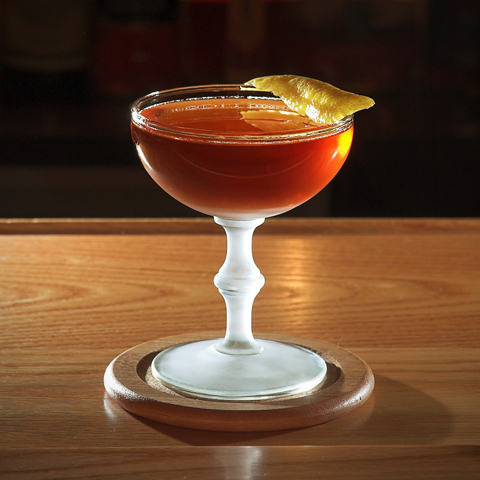
rule37fernetbrancacocktailFernet Branca Cocktail
From Dale DeGroff’s Craft of the Cocktail

- 2 oz gin (Tanqueray)
- 1/2 oz Fernet Branca
- 3/4 oz sweet vermouth (Rosso)

That’s it. No juice here, so pour it into a mixing glass, add ice, and stir.
Serve in a chilled cocktail glass (or on the rocks if you prefer) and garnish with a flamed lemon peel.


Well, based on the ingredients, it seems like it’s going to be interesting. Somewhat like a Negroni, using gin, amaro, and sweet vermouth, but the proportions are way off (Negroni is equal parts). That Fernet Branca is going to be wildly different from Campari, and there’s a lot more gin to deal with. I’m frightened. Hold me.


First impression of the aroma is of the Fernet Branca mint/menthol, with a sickly sweet floral gin essence mingling in. Fernet Branca is powerful stuff, and I think it’s going to take four times more gin to counteract it. It’s that herbal medicine with some gin.

In we go.

Bitter. Right off. Some bark and cinnamon, then various dry herbs. Dry spice, not savory. Lavender? That would be the gin coming in now with floral and citrus notes. It’s alcohol warm all the way through, and finishes minty/piney, like candy canes on a Christmas tree. It’s boozy and a flavor punch. Bitter overall, so don’t chug these down like a tiki drink. This is more like an aperitif. Or digestif. I’m not sure which. Probably both. The Fernet Branca is a renowned digestif, but vermouth is typically an aperitif. Gin is gin. Screw it: drink it whenever you want. But carefully.

Another note: serve this one in a CHILLED glass and drink it as cold as possible. I’m not sure why, but I’m getting the impression that this one would taste absolutely vile at room temperature. There’s a lot of herbs, spices, flowers, and citrus here, but it’s very very dry overall, and none of those attributes get better in a lukewarm drink. Served hot might be a different story, but tepid is going to be a train wreck.


rule37fernetbrancacocktail_altHere’s the Lady Friend:
*Brow furrows. Bitter face.* “I get gin, an alcoholy burn, then the Fernet.”
No no no. Don’t tell me what’s in it, tell me what it TASTES like. Close your eyes, take a good sip, swirl it around in your mouth, swallow, and chew it for a second and tell me what you’re TASTING.
Piney in the beginning. Christmas tree, alcohol, just alcohol, maybe a little grapeyness, kind of like grapey spicy though. Spicy, not like chili spice, but like cinnamony, but not like really, but more in that direction. Spicy. And I’m still tasting Christmas tree.”
Ok. Much better. Now we’ve got some adjectives. Wasn’t too far off from my impressions, but sometimes it’s a struggle to get her to use her WORDS.


So, there it is. Dry, spicy, bitter, but not bad overall. An avant ou apres repas sipper. Just don’t let it get warm.

Rule 37: The Waldorf

Modern Drunkard Magazine’s articleThe 86 Rules of Boozing, by Frank Kelly Rich states:
Rule 37. Try one new drink each week.
The Rule 37 series of posts chronicle my attempts to accomplish this feat every week.
For the recipes of R37s past, click the Htf do I make these drinks? tab.


Well, after a busy week, I was left scrambling for a Rule 37 on Friday night. Dale DeGroff’s The Craft of the Cocktail happened to be lying nearby, and as my tried-and-true standby recipe book, it didn’t let me down. If I’m not careful, I might wind up documenting the entire book. It’s not my fault! It’s full of great drinks. This week’s tipple might not have been the most unusual concoction, but it was still mighty tasty.


The Waldorf

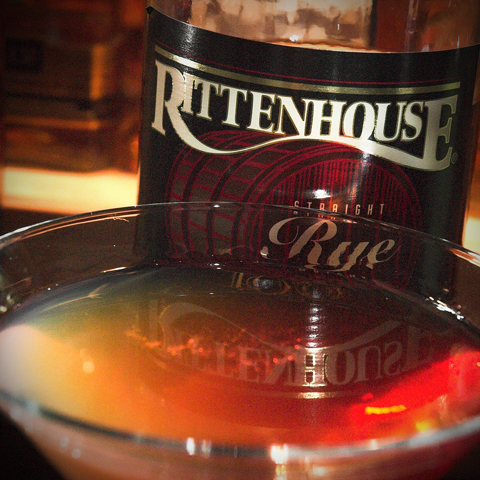
- 2 oz rye or bourbon whiskey (Rittenhouse Rye)
- 3/4 oz sweet vermouth
- 1/4 oz Ricard (Pernod)
- 2 dashes Angostura bitters

Swirl the Ricard, or Pernod, or whatever anise flavored concoction you plan to use (I’m sure real absinthe would do just fine as well) in the mixing glass. I say swirl, but it works better to tilt the glass at an angle, and rotate/turn, which rolls the liquid around. The goat is to simply coat the inside of the mixing glass with the anise liqueur. This differs from other recipes I’ve seen, like a Sazerac, where you coat the drinking glass. Here, you’re only coating the mixing glass. Add ice, and pour in the other ingredients. STIR, strain, and serve in a chilled cocktail glass. No garnish specified, but I’d likely add a nice cocktail cherry, as with a Manhattan.


So, yeah. It’s basically a Manhattan with a Ricard rinse. Don’t discount that too much; it makes a big difference.


I was feeling fancy, and falling behind the Lady Friend in the drink count, so I jazzed up the recipe with my treasured 100 proof Rittenhouse Rye. I had seriously considered using the Old Crow Reserve bourbon, which came highly recommended from Drinking the Bottom Shelf writer Will Gordon, and he’s dead on. It’s stupidly inexpensive, and stupidly tasty. $13 bourbon shouldn’t be that good. I’ve come to enjoy it enough to hoard and stockpile reserve supplies, and recently acquired a large surplus which should keep me happy for a reasonable length of time, if I don’t quaff it in an unreasonable manner. Which can happen. Frequently. However, the Rittenhouse is one of my all-time favorites. Big, bold, 100 proof and spicy rye, versus a sweet sweet bourbon. It also gives me a good benchmark, since I’m quite familiar with how a Rittenhouse Manhattan should taste.


Nose: Spicy rye bite, with a touch of vermouth sweetness. The anise of the Pernod shoves its way through, full of licorice and shenanigans. The Angostura adds its dark spice, and between the rye and Pernod, there’s a weird little aroma dance going on. It almost smells Christmasy.

Taste: Cool, then suddenly warm. Not hot, but warm. The rye spice is tempered by the vermouth, and strangely offset by the anise flavors. Rinsing the glass made a HUGE difference. Angostura is there, laughing in the background, cheerful and cinnamon spice. It’s almost as if the hot rye and cool anise are magnetic opposites, and they have a little battle for control of the taste buds. It’s the tastiness of a Manhattan, but with a new player to the game. The Pernod engages in a tug-of-war with even the power of the Rittenhouse. I wanted to put “Rittenhouse Powerhouse” but it was just too much.

The Lady Friend declared “Yup. Pernod.” upon smelling it, then furrowed her brow as she took a sip.
“I taste the Rittenhouse up front, which is tasty, then Pernod in back. Rittenhouse comes back. It’s good. It was a good little sip. It’s interesting.” She usually can’t stand my high-proof rye Manhattans, so this one was tamed down enough for her to taste, though there’s still plenty of flavor. It is indeed an interesting palate experiment, and a great twist for a Manhattan lover. Try one.

Rule 37: The Fitzgerald

Modern Drunkard Magazine’s articleThe 86 Rules of Boozing, by Frank Kelly Rich states:
Rule 37. Try one new drink each week.
The Rule 37 series of posts chronicle my attempts to accomplish this feat every week.
For the recipes of R37s past, click the Htf do I make these drinks? tab.


This week’s Bacchanalian bounty comes courtesy of 12 Bottle Bar, a post from about two years ago. The Fitzgerald is, essentially, a gin sour. Apparently created by legend Dale DeGroff, 12 Bottle got the recipe from DeGroff’s OTHER cocktail book, The Essential Cocktail: The Art of Mixing Perfect Drinks. If I owned that particular tome, I likely would have made this one long ago, as I am generally a fan of sours. Sours are a certain family of cocktails, like slings, cobblers, flips and collinseses. The sour is a mixture of spirit, sugar, and citrus juice, usually in similar ratios, and is one of the most popular styles of mixed drinks. Here’s a few examples:

Whiskey Sour: whiskey, simple syrup, lemon juice

Daiquiri (Rum Sour): rum, simple syrup, lime juice

Margarita (Tequila Sour): tequila, triple sec, lime juice

Sidecar (Brandy Sour): brandy or cognac, triple sec, lemon juice

Kamikaze (Vodka Sour): vodka, triple sec, lime juice.

Pisco Sour: pisco, simple syrup, lime juice, egg white, Angostura bitters

Traditionally, a whiskey sour also contained egg white, which gives the drink a frothier, creamier mouthfeel, though I don’t really care for it.


So, the Fitzgerald is a gin sour, with some Angostura bitters added in. Here’s how to make it:


The Fitzgerald

- 1 1/2 oz gin (Bombay London Dry used)
- 3/4 oz lemon juice
- 3/4 oz simple syrup
- 2 dashes Angostura bitters

Shake with ice, strain, and serve in a cocktail glass. Float a lemon wheel as garnish. Sip quietly among the violets whilst contemplating the Violet Hour.


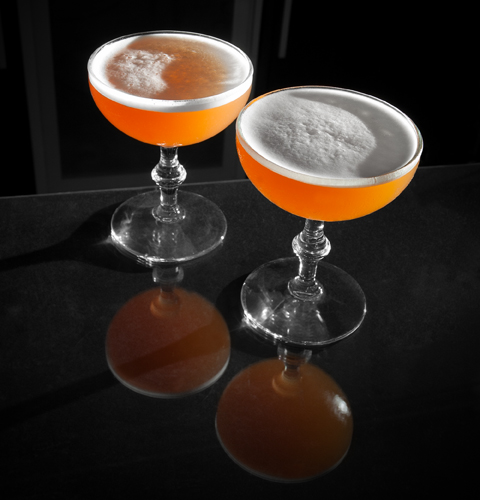
The two dashes of Angostura give the liquid an orange hue, rather than the usual pale lemon yellow sour. The nose is rather gin-y, with a botanical perfume wafting up from the surface, despite the lemon wheel lazily drifting about the coupe. There is a slight Pledge quality from the citrus, though the gin certainly dominates the aroma.


The taste is a lovely floral mixture of gin and lemon, but sweet. After being spoiled by tasty Rehorst Gin, I find the Bombay London Dry to be a bit on the perfumey side, like funeral homes and plug-in air fresheners. It’s certainly a lemony drink, and the Angostura lends a much-needed dark spice to the background. Without the bitters, this would likely be too sickly-sweet, but the cinnamon clove zest of the Angostura certainly livens up the party. It’s quite nice, but I’d like it better with a different gin and an extra dash of bitters.


Rule 37: South Beach

Modern Drunkard Magazine’s articleThe 86 Rules of Boozing, by Frank Kelly Rich states:
Rule 37. Try one new drink each week.
The Rule 37 series of posts chronicle my attempts to accomplish this feat every week.
For the recipes of R37s past, click the Htf do I make these drinks? tab.


It’s warm again. Like way too warm. Much warmer than mid-April should be. Seriously, it’s either 40 or it’s 80. Quit foolin around.

So we’ve got another tropical-sounding drink for this week: Dale DeGroff’s South Beach. Yes, he invented it. His book says so. Also, the heat is making me cranky, so don’t argue with me, whippersnappers.


South Beach
From Dale DeGroff’s The Craft of the Cocktail. Dale sez “I created this one for the Paddington Spirit Distributors Company in 1992 to find Campari cocktails that were less bitter and would appeal to the American palate. This one worked.”

- 3/4 oz Campari
- 3/4 oz amaretto
- 2 oz fresh orange juice
- 1/2 oz simple syrup (optional)

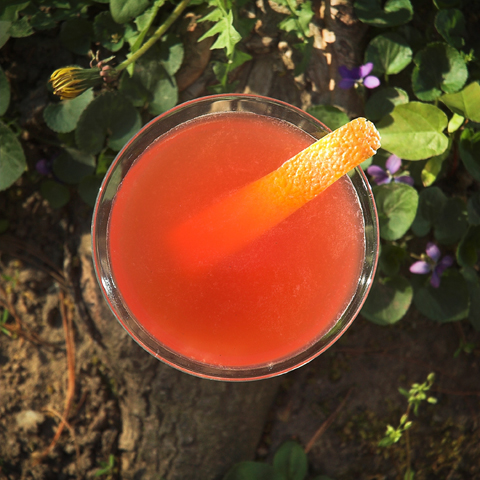
Shake all ingredients vigorously (to make sure that pulpy orange juice gets mixed in well and good) and strain into a chilled cocktail glass. Double strain with a tea strainer for a cleaner, less pulpy drink (my preference). Garnish with a flamed orange peel. Sip on the veranda.


Well, it certainly smells sweet and orangy, though the Campari certainly noses through. The taste is quite pleasing. Definately a Campari drink, albeit much subdued. It really is a beginner’s Campari tipple. The orange juice gives it body, and the amaretto lurks underneath with a syrupy dark fruit flavor. Though DeGroff mentions that the simple syrup is optional, I did include it, and I suggest you do as well, especially if you’re not a big fan of the Campari bittersweet flavor. I do enjoy Campari, though I think this drink would be too bitter without the extra syrup. A hit of grenadine might play nicely in place of the simple syrup, and would only deepen the drink’s lovely reddish-orange hue.


The Lady Friend, who was making some blue-tinged tequila monstrosity (she just added “of course I am; that’s how I roll“) had a taste and liked it more than she thought she would. She wrinkles her nose any time I open that Campari bottle, but was able to handle this one. She claims “the Campari and amaretto are nicely balanced,” and “…it was sweet, but I don’t know if I’d want more than one of them.” Not the biggest vote of confidence, but an improvement over her usual face of revulsion.

I, on the other hand, think it was quite nice, and shall have another.

Rule 37: The East India Cocktail

Modern Drunkard Magazine’s articleThe 86 Rules of Boozing, by Frank Kelly Rich states:
Rule 37. Try one new drink each week.
The Rule 37 series of posts chronicle my attempts to accomplish this feat every week.
For the recipes of R37s past, click the Htf do I make these drinks? tab.


Well, turkey day approaches, and the Lady Friend found several holiday/ seasonal cocktails to try. This one looked tasty, and she wouldn’t call in our dinner order until I chose a cocktail, so the East India was the one to go with. Now, I feel like I have a lot of Dale DeGroff’s cocktails on here, but that’s because I tend to use his book, The Craft of the Cocktail, quite frequently. It was the first cocktail book I bought, after seeing him on an episode of Modern Marvels (it was the “Distilling” episode), where they discussed the production methods of several liquors, and then cut to DeGroff mixing an example cocktail with each liquor. If I recall correctly, he did vodka (Cosmopolitan), scotch (scotch, neat), tequila (Margarita), rum (Mojito) and whiskey (Manhattan). There was a “Distilling 2″ episode that dealt with brandy, gin, and Irish whiskey. Maybe the Irish was in the specific “Whiskey” episode. I don’t remember exactly, but they’re all cool, if you’re a Modern Marvels and/ or liquor geek. I seriously got sucked into watching “Glue” on MM once. It sounds like the most mundane thing in the world, but then it got really cool and interesting. Anyway, DeGroff’s book is well-designed, clean, and features lots of good advice and interesting stories from his years of bartending.

So, that’s the story. I happened to have another DeGroff recipe on here that didn’t even come from the book. But it was tasty. I’m not trying to play favorites, but whatever, it’s my blog, so I do what I want. So there. Have a drink.


The East India Cocktail
The Dale DeGroff version, not from his book. Plus, I didn’t follow the recipe exactly, so there’s that.

- 1 1/2 oz cognac (I cheated and used brandy)
- 1 oz orange curaçao
- 1 1/2 oz pineapple juice (he said unsweetened, but I just used the Dole I normally use)
- 1 dash Angostura bitters (I used a couple)
- Flamed orange peel
- Nutmeg

Shake/strain/serve in chilled cocktail glass. Flame the orange peel over the top, and grate some fresh nutmeg on the foam.


So, we got the reciepe from hereabouts, and there is a helpful video as well. It won’t embed, so you’ll have to go watch it there. A couple of things: as noted in the video, if you give it a good, hard, shake, you should get some nice foam from the pineapple juice. I gave the Angostura a couple dashes, and found that it still got lost in the flavor of the drink, so I gave it a couple more over the top and stirred it in. I actually made two versions of the drink, one with Angostura bitters, and the other with my Fee Bros Whiskey Barrel-aged bitters, which has a lot of cinnamon and spice in it. I’m trying to get the Lady Friend to see the effect that different bitters have in cocktails, and she found that one to be much more flavorful. It’s one of my favorites, and really kicks up a Manhattan.

Though it’s not in the picture, I did flame the orange peel over the top (and the Lady Friend got to try as well), which means all you smell in this drink is orange. Not that it’s a bad thing, but the Lady Friend started to nose it, and I said she wouldn’t get anything but the orange. We both enjoyed the cocktail, though I omitted the nutmeg. I don’t even know where I would go about finding fresh nutmeg, though I should probably find out, as it pops up quite commonly in holiday seasonal cocktails. Actually, I don’t have a grater either. This is getting tricky. It’s a tasty cocktail without it, but could use some liberal application of the bitters, or a stronger one to start with.

Now go make it.

Rule 37: The Royal Hawaiian

Modern Drunkard Magazine’s articleThe 86 Rules of Boozing, by Frank Kelly Rich states:

Rule 37. Try one new drink each week.

The Rule 37 series of posts chronicle my attempts to accomplish this feat every week. For the recipes of R37s past, click the Htf do I make these drinks? tab.


Friday night! Cocktail night!

…but what cocktail to have?

I hit some cocktail doldrums. Despite having a constant list of Rule 37 suggestions, I was adrift in the Ennui Sea with no wind in the sails. I flipped through various recipe books and hit random drink suggestions on a couple websites, but nothing seemed appealing. When this happens, I tend to fall back on my fav book, Dale DeGroff’s Craft of the Cocktail, and scan the pages looking for something tasty. There were a couple things that looked mildly interesting, but what I finally settled on was something completely unexpected.


The Royal Hawaiian
From Dale DeGroff’s The Craft of the Cocktail

- 1 1/2 oz gin (Beefeater London Dry)
- 1 oz pineapple juice
- 1/2 oz freshly squeezed lemon juice
- 1/4 oz orgeat

Splash ingredients into mixing glass like the waves crashing on the beach, add ice and shaker tin.

Shake to a hula rhythm while wearing a grass skirt.

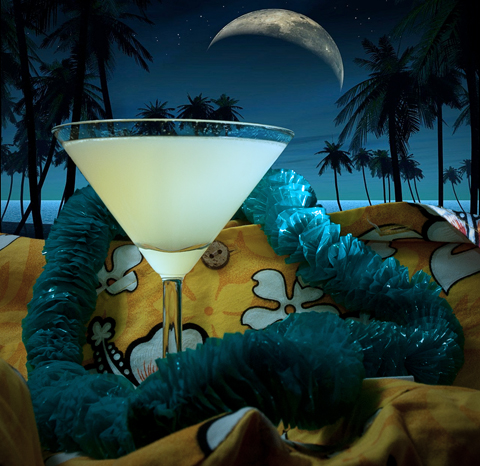
Sip by moonlight on a white sand beach.


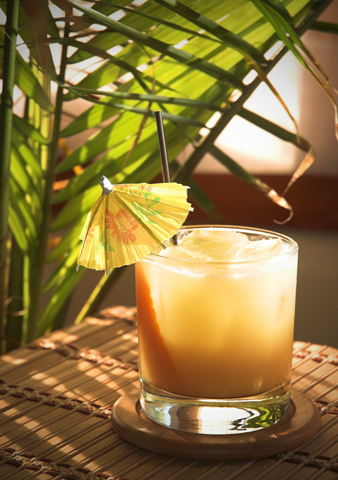
This was a surprisingly good drink. I expected it to either have too much gin flavor, or too much pineapple, but it really balanced well. Sure, you can taste the gin up front, and the pineapple juice sweetens and rounds out the finish, but not in an overpowering way; I find pineapple tends to be stronger in drinks than I prefer. I had been trying to avoid gin-based drinks, since SFHQ is in a bit of a gin deficit at the moment, and what remained of a bottle of Beefeater was being rationed, mainly for usage in an Negroni in times of amaro emergencies. However, nothing else caught my attention, so in went the gin. Mix, shake, sip. Hmm. Since the first one was so nice, I may as well have another and kill off the wounded soldier. Plus, the last shot in the bottle is free. See if your local bartender agrees.

Rule 37: The Casino Royale

Modern Drunkard Magazine’s articleThe 86 Rules of Boozing, by Frank Kelly Rich states:
Rule 37. Try one new drink each week.
The Rule 37 series of posts chronicle my attempts to accomplish this feat every week.
For the recipes of R37s past, click the Htf do I make these drinks? tab.


Time for another Rule 37: A drink I’ve never had before. I had a half-bottle of champagne awaiting consumption in my fridge for my traditional birthday quaff, and another bottle of Domaine Chandon Riche (technically, sparkling wine) donated by a friend who works as a promo girl for Moët Hennessy (Hi LK!). The best-tasting booze is free booze, so I was more than happy to give it a good home. So, it was decided on by Lady Friend and myself that our Friday cocktail night this week would involve champagne.

So, we had to find a couple champagne/sparkling cocktails that we had never had. We’ve both tried French 75′s (while forcing her to watch Casablanca for the first time), Champagne Cocktails, and a Kir/ Royale, so things were getting a bit worrisome for finding a new tipple. She was intrigued enough by my description to try a Black Velvet, which is half champagne, half Guinness, and a drink I’ve had before, for an earlier Rule 37. I resorted to my cocktail book library, and grabbed my go-to, Dale DeGroff’s The Craft of the Cocktail. Flipping through, I got as far as the letter “C” before finding an appropriate candidate: an original by DeGroff called the Casino Royale.

This is where a little explanation is needed. Casino Royale was the first James Bond book written by Ian Fleming back in 1953. In the novel, Jimmy B. orders a drink of his own invention, called the Vesper, named for (spoiler!) double-agent Vesper Lynd (whose name apparently is a play on “West Berlin.” Neat.) Anyway, the Vesper is a concoction of gin, vodka and Kina Lillet, creating a sort of Martini varient. Later in the books, and eventually films, Bond prefers Vodka Martinis, and turns the world into idiots ordering Martinis as “shaken, not stirred.” Sorry Bond; clear, liquor-only cocktails like the Manhattan or Martini should be stirred, saving the shaking for drinks with fruit juice. However, the popularity of the Bond films essentially helped bring vodka into the national consciousness, especially his (product-placement) brand of choice, Smirnoff.


This look just impregnated all the female readers.


This is not either of those drinks. DeGroff’s recipe is an ode to the Bond legend without being a Vodkatini or Vesper varient. And there’s no vodka anywhere near it. It does have plenty of booze, with gin and champagne. Just a touch of lemon juice helps bring down the sweetness of the champagne and orange juice.


Casino Royale
A Dale DeGroff original recipe

1 oz gin
1/2 oz maraschino liqueur
1 oz fresh orange juice
1/4 oz fresh lemon juice
Champagne or sparkling wine to top

Combine ingredients (except champagne) in a cocktail shaker and, well, shake.
Strain into a cocktail glass (preferably chilled) and top with champagne or sparkling wine.

Garnish with orange twist.

Lovely with an au naturel woman in bed
and an all natural Walther PPK on the bedside table.


Though I’ve had a Black Velvet before, I decided to join the Lady Friend and made one for myself, following the Casino Royale. The story with this one is that the drink was created following the death of Prince Albert, Queen Victoria’s husband, in 1861. The Queen mourned his death for the rest of her reign, and it’s said that even the champagne was draped in black (Guinness), creating this drink. It’s not technically a cocktail, as no spirits are involved, but as a beer and wine combination, it’s quite… interesting. The sweetness of the champagne mixes well with the creamy stout.


Black Velvet

4 oz champagne

4 oz Guinness stout

Um, that’s it.


Pour (carefully, both will create a lot of foam) equal parts champagne or sparkling wine and Guinness stout into a champagne flute.

Some sites suggest pouring the Guinness first and layering the champ on top. We obviously didn’t follow that tidbit, and also used a full on pint glass instead of a flute. We’re renegades like that.


As a bonus, I got to try something I’ve always wanted: sabering the top off a bottle of champagne. Basically, you use the blunt edge of a large knife (or in my case, my taekwondo sword) to hit the neck of the bottle at the seam where the two halves meet the top. The blunt trauma (not the sharpness of the blade) causes the glass to break at the weakest point, and the cage, cork and top of the bottleneck go flying off. For further details, check out a fav blog of mine, Andrew Bohrer’s fantastically opinionated Caskstrength. Specifically, you should read his series on “Drinking Like a Man,” and in this case, #8: Order Champagne, Often. Lots of useful info, and instructions on how to properly saber a bottle towards the end of the post. Awesome.


Ki-yah mofos.
Also, note the cork flying off to camera right. Photo credit goes to the Lady Friend.


Return top