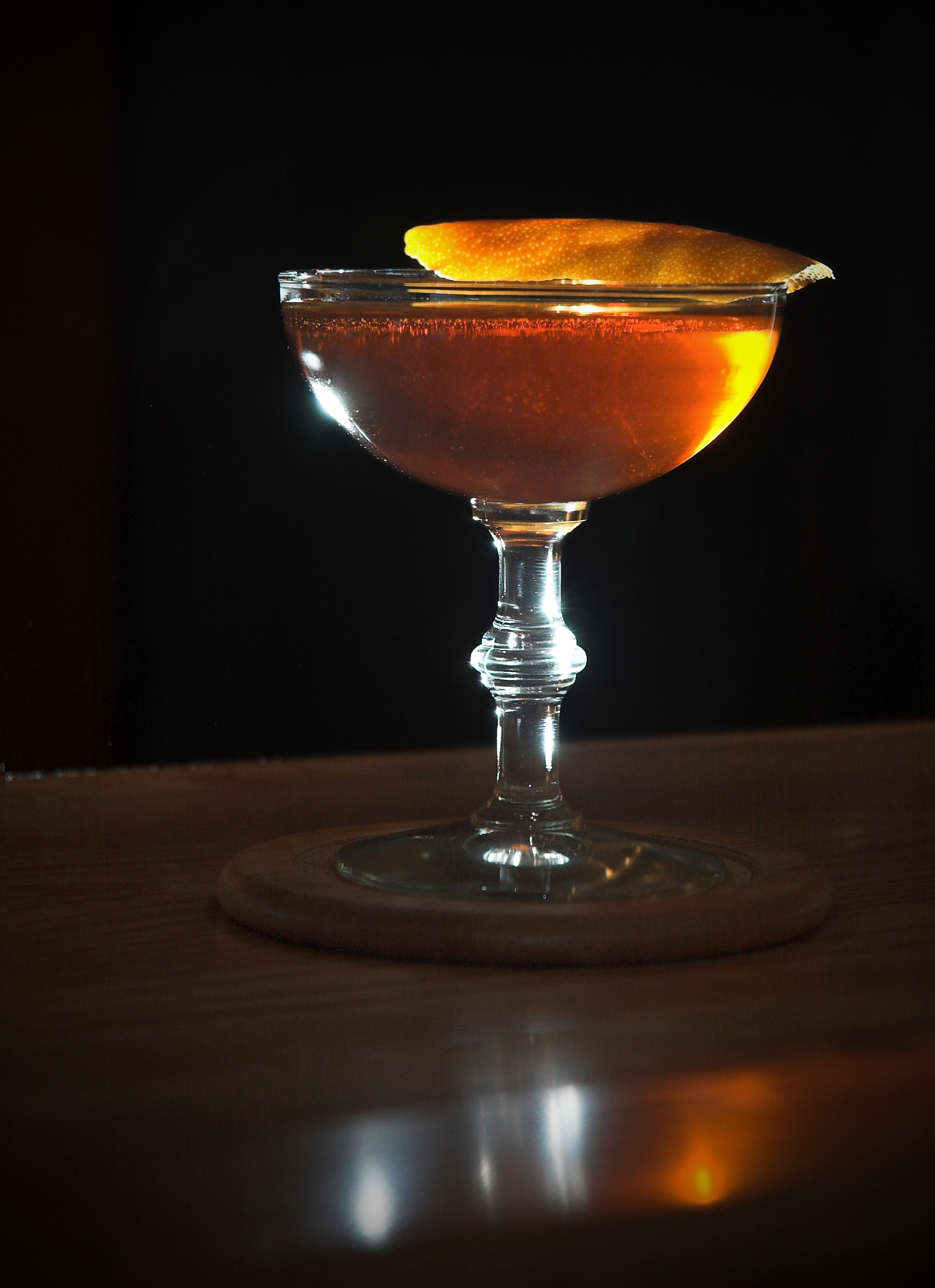
Rule 37: Rosita

Modern Drunkard Magazine’s articleThe 86 Rules of Boozing, by Frank Kelly Rich states:
Rule 37. Try one new drink each week.
The Rule 37 series of posts chronicle my attempts to accomplish this feat every week.
For the recipes of R37s past, click the Htf do I make these drinks? tab.


Ah, sweet Fridays. Cocktail night! I even had a surprise guest!


Once you give them a cocktail, they just come begging for more.


With the Lady Friend driving up from Boston, she was too tired to come up with her own Rule 37, and charged me with making one for her. I snagged a copy of a Mr. Boston recipe book and found that a drink had already been bookmarked. It was the Rosita, which uses both tequila (for she) and Campari (for me). Interesting. Or horrifying. I’m not sure yet. Mr. Boston does some strange things. Still, I’m willing to give it a try. I broke out the Agavales for this one, which was a great tip from Bottom Shelf Drinker Will Gordon. Read his review here, and then read everything else he’s written.
Seriously.

Ok, drink time. Let’s see what happens.


Rosita
From Mr. Boston’s Official Bartender’s and Party Guide

- 1 oz tequila (used Agavales)
- 1 oz Campari
- 1/2 oz dry vermouth
- 1/2 oz sweet vermouth

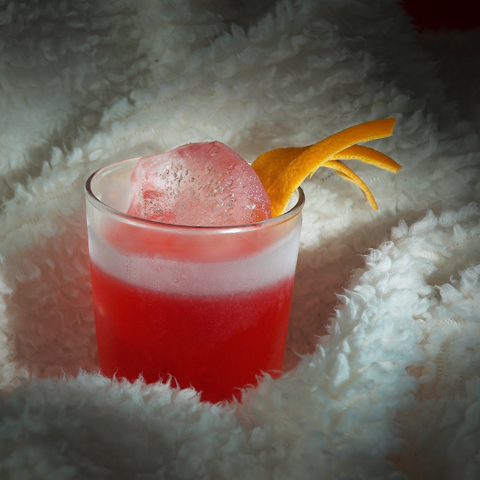
All spirit (no fruit juice) so this one is stirred. The book suggests serving with a lemon twist (which I just plain forgot) and also instructs to build it in an Old Fashioned glass over ice. I guess that could work too, but I was making a double batch. So, stir with ice in a mixing glass (that’s why it’s a MIXING glass) and strain into an ice-filled Old Fashioned or rocks glass. Don’t forget the lemon twist.


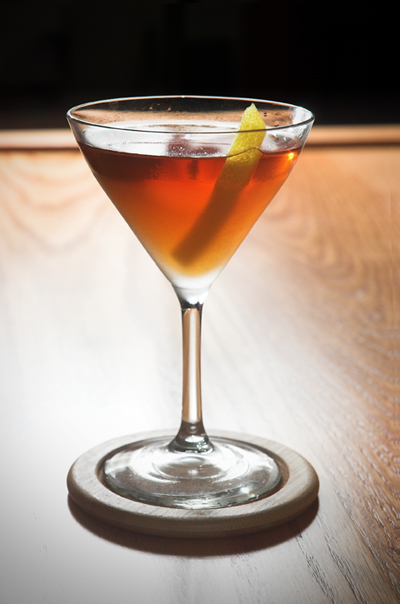
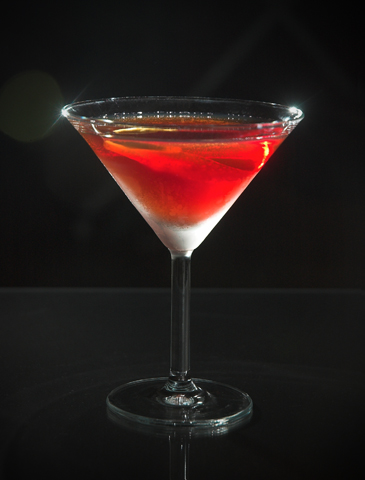
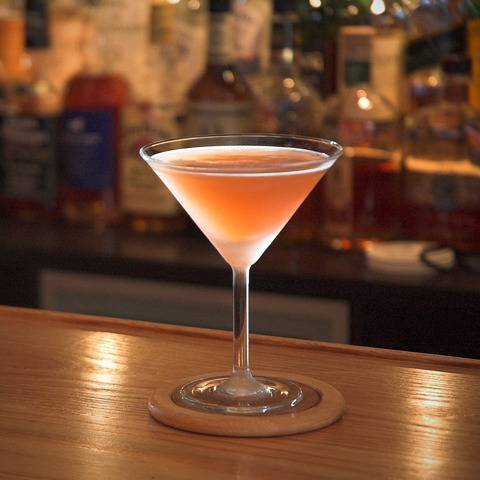
Well it LOOKS pretty. I refused to tell the Lady Friend what was in it, and the strawberry hue had her guessing that there was grenadine in there. Nope. But she certainly smelled the tequila. And tasted the Campari. Had a lucky guess on the sweet vermouth, and couldn’t pin the dry (that’d be a tricky one to pick out flavor-wise). So now it’s my turn. Let’s start with a sniff.

PHRORawrHAMRah. It REEKS of tequila. Smokey and irresponsible. Not like an elderly and well-mannered Scotch. Really, that’s all that I’m getting in the nose. Just tequila. Blargh.

The taste is another story. The tequila is up front, but more subdued than you’d guess from the aroma. The Campari comes a-knockin’ in the middle, and the smokey Mexican spirit and bittersweet Italian liqueur do strange, unmentionable things with and/or to each other. It’s like watching two fat people rub sunblock on each other, or seeing senior citizens vigorously making out. Horrifying, yet hypnotizing. It can’t be unseen, and this drink can’t be untasted. A smokey and spicy tequila pig in an herbal syrupy Campari blanket. The vermouth is just there to make sure things don’t get too out of control.


It’s a really strange drink, but I kind of like it.

Rule 37: Hazzard County Line

Modern Drunkard Magazine’s articleThe 86 Rules of Boozing, by Frank Kelly Rich states:
Rule 37. Try one new drink each week.
The Rule 37 series of posts chronicle my attempts to accomplish this feat every week.
For the recipes of R37s past, click the Htf do I make these drinks? tab.


Just because I’ve been a slacker with the posts doesn’t mean I haven’t been drinking my Rule 37s. So let’s try to get caught up. This one, the Hazzard County Line, comes courtesy of the Lady Friend, though she had no idea what the Hazzard County reference was.


Hint.


In addition to having a tv-themed namesake, apparently it’s a drink at The Vanderbilt in Brooklyn. She found it on this site while looking for decent apple brandy recipes.

Since this is a spirit-forward drink, I’m actually using some very nice ingredients. It’ll make a big difference in a drink where you really taste the booze. For the bourbon, we’ve got Smooth Ambler’s Old Scout straight bourbon, clocking in at 99 proof. A hand-numbered bottle, (batch two), this one was a gift from boozing buddy Brent when he visited Boston earlier in the year. It’s not a Kentucky bourbon from Bourbon County (or Hazzard County, Georgia, for that matter), but rather hails from West Virginia. I swore I’d never use this one for mixing, but this spirit-heavy drink seemed like an acceptable compromise. Plus, the 99 proof was a much needed boost.

The peach brandy comes from Great Lakes Distillery, one of my happy places out in Milwaukee. They make a range of eau-de-vie brandies and liquors, like Grappa, Kirschwasser, and peach, pear and apple brandies. These are the real deal… a bit hot and boozy up front, but once the heat evaporates, they leave a wonderful fresh fruit flavor behind. Currently on the bar are the apple and peach brandies (I don’t like pear), and they’re great to use for a nice crafted cocktail featuring the spirit.

So. Let’s mix it up and see what happens.


Hazzard County Line
From The Vanderbilt Restaurant and Bar, Brooklyn, New York

- 1 oz peach brandy (Great Lakes)
- 1 oz bourbon (Smooth Ambler)
- 3/4 oz lemon juice
- Dash of honey (Blue Line Apiary)
- Sprig of fresh mint
- Lemon wheel

Shake it real hard and fast like bouncing down a backcountry dirt road in your ’69 Charger. Serve over ice in a mason jar, garnish with a lemon wheel and a big ‘ol sprig of fresh mint. It kicks like the ‘shine from your uncle’s still, and it’ll make you jump right over the river. Better learn to fly or start flappin’ your arms real hard.


The original recipe just said “shake with ice, then serve over ice. Garnish with lemon wheel.” Um. What about the mint? What kind of glass? Yeah, this recipe isn’t too specific about a couple things. I used a nice big sprig of mint as a garnish, as with a julep. I also tossed it into a mason jar/drinking glass just like they’d do in Hazzard County. I’d recommend using some honey syrup instead of straight honey. Honey is a little too thick to mix well, especially with ice. Use a half ounce of honey syrup (1 part honey, 1 part water) in place of the straight stuff. Mine came from Blue Line Apiary, which was featured in my Rule 37: The Bee’s Knees.

Ok. Let’s try it.
Well, lots of mint and lemon in the aroma. Mostly because of the mint sprig and lemon wheel stuck up my nose when I go in for a sniff. Kind of hard to get past those, so let’s have a taste.

Whoa.

Boozy.

It’s an interesting combo. There’s the dark quality of the bourbon, and a lot of lemon right from the start. The peach and honey flavors are more subdued and come in with the finish. It’s kind of like a cough drop: honey, lemon, and alcohol. Actually, this would probably make a dandy cough remedy. Plus the booze would put you right at ease. I think it’s rather nice (good thing I made myself a double) though the Lady Friend found it way too boozy. As if there is such a thing.

Now if only there were a silly and gratuitous Dukes of Hazzard picture to end this post with…


That works.
Someone got Daisy Duke out of her Daisy Dukes.


Did you ever know that you’re my hero?

I don’t usually reblog/repost things, but I came across this video on The Pegu Blog, (who originally found it here on The Borderline Sociopathic Blog For Boys) and it’s unbelivable. Not only does this guy (Richard Paterson) have the right techniques, but he presents them in a wholly amusing fashion. THIS is how to drink scotch whisky.


Also, on his point of using chilled rocks to cool the whisky, yes, you can buy some.

Review: Why BLATANT beer is awesome and you should buy some.

I certainly hope you’ve heard of Blatant Beer by now.

If not, prepare for a trip to the liquor store.


BLATANT! Brewery is the ale-producing offspring of brewer/owner Matthew Steinberg, Massachusetts brewing legend. He’s been involved with breweries such as Offshore Ale, Harpoon, Rapscallion, and helped Drew Brousseau with his startup brewery, Mayflower. He left Mayflower in 2010, and decided to finally start his own brewery, though as a contract brewer without his own facilities. He’s since brewed at Just Beer in Westport, and Paper City in Holyoke. Steinberg sees nothing wrong with the stigma of contract brewing (brewing your own beer in someone else’s brewery, or even having them brew it FOR you with your recipe) but strongly advocates growing the local beer community. He and I actually seem to share a lot of similar views when it comes to beer, and Honest Pint has a GREAT interview with him here. But I want to talk about the beer.


Last summer I bought myself a bomber of a boldly graphic-ed local IPA called Blatant and was blown away. It was a true American-style IPA, combining the best of East Coast dry bitterness and West Coast sweetness. Absolutely incredible. So I gushed about it to anyone who would listen, and may have called the brewer “a magnificent bastard” on Twitter after downing 22oz of his 6.5% abv hoppy wonderfulness. He actually responded, and after some bantering and an exchange of emails, I finally got to meet up with the man himself, Matthew Steinberg. He had a couple tastings scheduled in Cambridge, and suggested that I stop by. So I did.

This is a man who knows his beer. And is excited about it. Very. In fact, he’ll talk your ear off about beer, which is kind of awesome. During our chat, in between sample pours to curious shoppers, he described his beer as being “a brand without branding appeal.” He wants the beer itself to be the important part, rather than the label. Curious, as I find the simple graphic very eye-catching and appealing. He was pouring samples of his two beers: the aforementioned IPA (which was in such short supply at the time due to wild demand he had to score some bombers from a friend’s stash) and his Session Ale.


Happiness.


A session ale is a low(er) alcohol beer designed to be tasty, yet, well, sessionable. Depending on who you ask, a session beer has no more than 4/ 4.5/ 5% abv, so in theory you could drink many of them in a session without getting smashed. After the arms-race of insanely hopped high-alcohol double/Imperial/triple ales coming from the West Coast the past several years, the pendulum is swinging in the other direction: session ales, a notable local example being Chris Lohring’s Notch Brewing, with no beer over 4.5% abv. Among brewers, it’s said that a true test of a brewer is to make a flavorful yet low alcohol beer, as it takes more attention to detail and craft. Blatant took the challenge, and Steinberg was kind enough to give me a bottle to sample (and a pint glass!).


Well, it’s got a lovely amber glow, and a nice thick head that dissapates slowly. The nose is certainly hoppy, but very pleasing. It smells like an IPA or strong pale ale, with sweet spruce pine, a darker, resinous sap, and a slight undercurrent of overripe tree fruit. There’s a touch of cereal grain in there, like the first whiff of a fresh box of Cheerios, but it’s blown away by the hoppy delightfulness. Let’s have a taste.


Oh.
Oh wow.
Wow.


Let’s have another taste.


Ok. I can type now. It’s certainly a flavorful beer. The malt is MUCH more apparent in the flavor, with a nice barley cereal flavor and a good dose of toastiness, though not to the level of a brown ale or stout. Toasted not roasted. A little bit of metallic sharpness, again from the malt, and some hop bitterness in there, dry and powdery, like a good East Coast style, which itself borrows from English style ales. It’s very reminiscent of Mayflower’s Pale Ale, with a bitter dry hop and solid malt back. This is maltier, however, though not in a caramel-syrupy-sweet-mess, but rather clean and breakfast-like. Good solid grain. Liquid bread. It starts hoppy, moves to the lovely grain in the mids, and finishes with a mix of both. Smooth, incredibly tasty, and still under 4% abv.


It’s pretty amazing. You don’t get beers like this from amateurs, and Steinberg is one of the Massachusetts pros, having worked in the brewing industry for the past 15 or so years. It’s hard to believe this brew clocks in at 3.8%… the flavor would have you thinking it’s at least 5% abv. A fantastic session ale. The IPA blew my socks off, but the session ale shows what a true crafted beer is. I wouldn’t waste time with a low-alcohol beer if it weren’t phenomenal. Go get some.


Squirrel Farts is now accepting solicited product reviews! Send me a bottle and I’ll take a pretty picture and talk it up in the amusing tangential manner you’ve come to expect. Beer, spirits, mixers, whatever. Contact here for details. Note: I will mention that the review was solicited, hell, I’ll even brag about it. Free booze? Damn right. But The Man says I have to say I got it for freebies. I’m excited about free stuff, so whatever. Now, that doesn’t mean that I’ll like it, or that I’ll give it a good review. But chances are if you read this blog, then we’ll get along. Put it to the test: send me your booze!

Rule 37: Three Miller

Modern Drunkard Magazine’s articleThe 86 Rules of Boozing, by Frank Kelly Rich states:
Rule 37. Try one new drink each week.
The Rule 37 series of posts chronicle my attempts to accomplish this feat every week.
For the recipes of R37s past, click the Htf do I make these drinks? tab.


So Squirrelfarts has been a bit lax on the posts lately. Mostly all Rule 37 cocktails. Well, the thing about that is the official primary Squirrelfart photographic device (um, my camera) had a bit of a fall, and it took Nikon over a MONTH to repair it. You know how some people wear a watch every day, then suddenly forget to put it on one day, and they’re all out of sorts and claim to feel naked? That’s what I’ve been like for the past MONTH. And it’s really put a damper on various Portland boozing adventures (well, there are still adventures) because if I’m going to do a particular distillery/brewery/bar/what have you then I’m going to do it right, with a proper review and proper photography. The past several Rule 37s have been photographed with the Lady Friend’s bright pink Sony CyberShot, which is all well and good except I can’t do a thing about the lighting. Quite challenging to use natural light when my normal operating hours are rather nocturnal. But the real camera is back, and with it, proper pictures. I hope.


“What a piece of junk!”
She may not look like much, but she’s got it where it counts, kid.
I’ve made a lot of special modifications myself.


So yeah. Expect a bit more variety coming from Squirrelfarts HQ. Plus there’s a large backlog of things I still have to actually write about like Blatant Brewing, Newport Storm Brewery, drinking at the oldest tavern in America, more Milwaukee shenanigans, and a German absinthe review which came in a package with cool foreign words on it like “luftpost” and “zusatzleistungen.” What an elegant language.


Anyway, tonight’s cocktail was going to be something tropical once more, as it is still 80 or so degrees inside, incredibly humid, and torrential downpours outside. Who knew that Maine had such an equatorial climate? It was going to be the Bacardi Cocktail, with all its associated legalities, but then I sliced a lemon instead of a lime, and had to do some scrambling. While perusing rum drinks in the Esquire drinks database (featuring the venerable David Wondrich) I came across the Three Miller, which I had added to my “to-drink” list awhile back. Turns out there’s a bit of history there.

Paraphrased from Wondrich’s writeup and various other sources, the gist is that during Prohibition, the US stated that International Waters started at a point three miles from land. So, all the boozers and rum runners would simply sail out three miles and have a party. Or pick up some booze to bring back. The Coast Guard caught on an eventually upped the limit to TWELVE miles, but there was already a cocktail named for the original distance, The Three Mile Limit. That got shortened to the Three-Miler, and someone (Harry Craddock) probably picked up a typo somewhere and began calling it the Three MILLER. Strange.


Three Miller
From Wondrich’s Esquire Drinks.

- 2oz cognac
- 1 oz light rum
- 1/4 oz lemon juice
- Dash of grenadine


Wondrich’s recipe switches from ounces to teaspoons, so I’ve done the conversion for you. I hate when there’s two different units of measurement. Put it all in a mixing glass, shake it, and strain into a cocktail glass, preferably chilled. Some recipes flip the amounts of rum and cognac, and some others suggest a cherry garnish, but I went with Wondrich on this one.


Well, there’s three ounces of liquor in this one, and not much else. Let’s see what happens.

The nose is all booze. Mostly the grapey darkness of the cognac. The rum I used (DonQ) isn’t particularly flavorful, so it’s hard to get any sort of aroma from it as well. The taste is pretty much what you’d expect: a mouthful of cold cognac, with a little rum bite to it. Very boozy, but it burns off quickly. The little hint of lemon and grenadine sweetness aren’t so much there in the flavor, but rather in the roundness of the drink. Without them the booze burn would linger throughout the finish, but as-is they take the edge off. The grape flavor of the cognac lingers in the mouth, and is actually quite pleasant. Though I prefer my cocktails a tad more balanced, this one wasn’t bad. A bit more powerful than modern tipples, but cold, tasty, and full of booze. Which is pretty much all I wanted tonight.


Rule 37: Tiki Bowl!

Modern Drunkard Magazine’s articleThe 86 Rules of Boozing, by Frank Kelly Rich states:
Rule 37. Try one new drink each week.
The Rule 37 series of posts chronicle my attempts to accomplish this feat every week.
For the recipes of R37s past, click the Htf do I make these drinks? tab.


TIKI!

The new Portland location of SquirrelFarts HQ came with a “sun room” which is currently being converted into a tropical tiki room. Not that I’m really that into tiki stuff, but it is fun from time to time. Especially since it’s been way too warm here, and put me in the mood for equatorial style drinks. Yeah, it’s going to be real fun looking back on this post in February when the snow drifts block out the sun. But for now, we’re in the middle of a summer downpour and it feels very tropical in here. And moist. Very very moist. Rainforest humidity.


So the Lady Friend made herself a Bajito, which was a Mojito with some basil muddled in. Decently tropical, but I’ve gone and done something silly. I got me a Trader Vic drink to make. In case you don’t know, “Trader” Vic Bergeron, was one of THE big tiki guys back in the day (he started in the 1930s) and grew his business to a franchise chain of tropical-themed restaurants. He claims to have invented the famous Mai Tai, though fellow founding tiki tippler Don the Beachcomber might argue that point.

Anyway, there’s a LOT of tiki history there that I don’t really want to get into, because everything is sticky with moisture and I’m thirsty. I got this recipe from Liquor.com, in a Valentine’s “Cocktails Built for Two” themed article. But since the Lady Friend is already sipping on her Bajito, after I taught her proper muddling techniques and unsuccessfully tried to crush some ice in a blender (didn’t work… resorted to the good ol’ “smash it with a hammer” method) I’m going to drink all of this myself.

Also, I’m selfish. And I don’t care who knows it.


Tiki Bowl
Makes two, but if you drink it all yourself, I certainly won’t judge.
From “Cocktails Built for Two” on Liquor.com

- 1 oz light rum (they suggest Puerto Rican, so I used DonQ)
- 1 oz dark rum (went with Meyers here)
- 1 oz brandy (E&J is great for mixing)
- 2 oz fresh squeezed orange juice
- 1 1/2 oz lemon juice
- 1/2 oz orgeat

Throw everything in a blender with ice and hit the loud button. Pour your frosty bev into a hurricane or some sort of tropical tiki glass. Garnish with a gardenia if you happen to have one of those lying around. I didn’t, but made it work.


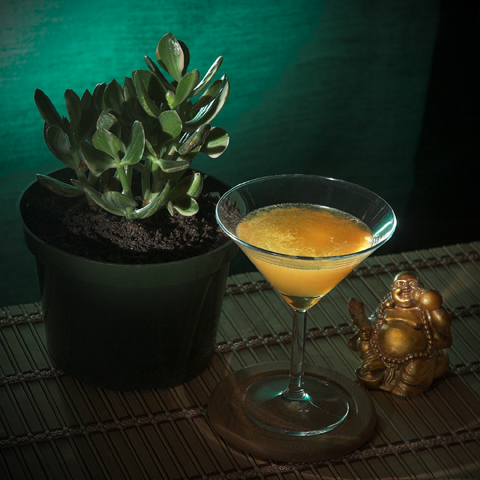
Well. It’s frosty and tasty looking. A nice orangy yellow color. Smells like fruit juice and booze. The brandy comes through quite a bit in the nose, though that could be the dark rum as well… whatever it is, it smells dark, syrupy, and tasty. It tastes orangy, which makes sense, though again the dark rum/brandy combo adds some happy dim warmth in there. I keep sucking Lilliputian icebergs into my straw which clogs the whole works. The downfall of a budget-brand blender I suppose. Still, the drink is tasty, though I put a bit too much ice into it. It hurts my teef. Tropicality achieved!


I even gave some to the Lady Friend.

Rule 37: The Honolulu Cocktail

Modern Drunkard Magazine’s articleThe 86 Rules of Boozing, by Frank Kelly Rich states:
Rule 37. Try one new drink each week.
The Rule 37 series of posts chronicle my attempts to accomplish this feat every week.
For the recipes of R37s past, click the Htf do I make these drinks? tab.


Ugh.
It’s way too hot.
Let’s have something tropical to drink.

This one I found simply on about.com in the cocktails section. I saw the link on Teh Twitterz, and decided it sounded nice. Plus, I just got some tropical plants, so that’ll work quite nicely for the picture.


According to the brief blurb on the webpage, this was allegedly an old 1930s cocktail from the Brown Derby in Hollywood. I did find references to a Honolulu Cocktail No. 1 (this version, from the Savoy Cocktail Book) and No. 2 (totally different). I really didn’t see much mention of it past that. Oh well. Not every drink can have a long and storied history.


The Honolulu Cocktail

- 2 oz gin (Bombay London Dry)
- 1/2 oz pineapple juice
- 1/2 oz orange juice
- 1/4 oz lemon juice
- 1/4 oz simple syrup
- Dash of Angostura bitters

Mix em up. Shake, strain, serve. Use a nice chilled cocktail glass here, with a lemon peel garnish. I used a giant one and made a spiral. The article suggested a sugared rim, but I really don’t like doing that. So I didn’t.

Well, there’s gin on the nose. Lemon certainly, due to my gigantosaurus lemon twist. The pineapple gives it an almost grassy or leafy aroma. I have no idea why, but it does.

It tastes… pretty underwhelming. Like gin with a bunch of juices thrown in. Which is pretty much the recipe. The juniper is there, but cut down by the fruit juices at work. Again, something in this combination, perhaps the gin/pineapple, gives it a wet, vegetative taste. Not unpleasant, but unexpected. There’s a little orange in there, and the Angostura cinnamon light on the finish. It’s… a pretty color. And it’s… um… cold? Yeah. There’s not a whole lot to say about this one. Perfectly drinkable, but wholly understated. Rats. I was hoping for a tropical getaway, but instead I’m just left in my underwear on the couch with a fan doing little to cut down the 437% humidity. If you’ve got gin and pineapple juice, have a Royal Hawaiian instead.

Rule 37: The Trinidad Sour

Modern Drunkard Magazine’s articleThe 86 Rules of Boozing, by Frank Kelly Rich states:
Rule 37. Try one new drink each week.
The Rule 37 series of posts chronicle my attempts to accomplish this feat every week.
For the recipes of R37s past, click the Htf do I make these drinks? tab.


This one comes from one of the blogs I follow, The Savoy Stomp, in which the author chronicles his way through the Savoy Cocktail Book. The book is one of the Bibles of cocktaildom, and was written back in 1930 by famed bartender Harry Craddock, as he worked in London’s American Bar in the Savoy Hotel. Savoy Stomp attempts to recreate these Prohibition-era cocktails as written, instead of updating them for modern tastes. He had a couple variations of Angostura-based cocktails in a recent post, and I chose one that sounded tasty, The Trinidad Sour.

The recipe jumped out at me for a reason. Its primary ingredient, Angostura Bitters, was used in a proportion I had never seen before. See, bitters are like the seasonings of the cocktail world. Like salt and pepper, you add just a pinch, or in the case of bitters, a dash (or several). It’s an integral ingredient in a great many cocktails. Just try a Manhattan without the bitters to see what a difference it makes. In fact, the very notion of a cocktail itself is based on just four ingredients: spirit, water, sugar, and bitters.


While there are many different types and flavors of bitters (Fee Brothers makes a wide range), Angostura is the default, and you can likely even find it in your supermarket with an oversized label, and bright yellow cap. It’s 45% abv, which makes it 90 proof, though considered a non-potable bitter, meaning it’s too concentrated to drink straight. Angostura dates way back to 1824, when a doctor named Johann Gottlieb Benjamin Siegert developed it as a healthful tonic, and named it for the town of Angostura in Venezuela. A distillery was soon built, and moved to the island of Trinidad in 1875 where it remains today. And it’s remained quite popular. According to their website, Angostura is the world leader in bitters and is available in 165 global markets. Yikes.

So. Bitters is normally used by the dash, which is why my current 4oz bottle is still kicking long after I bought it. Like eight years ago. This recipe is going to use a FULL OUNCE of the stuff, which should be interesting. That’s like seeing a recipe that calls for 17 pounds of salt. So I’m a bit wary, but intrigued. Be warned: Angostura bitters is quite concentrated (which is why it comes in 4oz bottles) and will stain the ever-loving holiness out of anything remotely porous that it touches. Like my shorts. And measuring cup. And countertop. And floor. Jaime Boudreau even used it as a wood stain to decorate his bar in Seattle. So when you’re doling out the full ounce, be careful.


The Trinidad Sour
As seen on Savoy Stomp.

- 1 oz Angostura Aromatic bitters. Yikes.
- 1 oz orgeat (Fee Bros. used)
- 3/4 oz lemon juice
- 1/2 oz rye whiskey (this time it was Pikesville Supreme)

Well, like any other cocktail, add the ingredients together in a mixing glass, add ice and a shaker tin, and shake away. You don’t need to pry off the little restrictor cap on the Angostura bottle; once you’ve got the bottle pointed straight down at whatever you’re using to measure, just shake the bottle, and that ounce mark will be hit fairly quickly. Again, be careful. Unless you like Angostura colored surroundings. And clothes.

I decided to garnish this with a big slice of lemon peel.


Nose: Well, not surprisingly, I smell Angostura and nothing else. The aromatic qualities are doing exactly what they’re supposed to. Dark spices, bark, cinnamon. It brings to mind the Carribean, and old timey sailing ships hauling a cargo of spices.

I’m kind of nervous about tasting this one, but here we go.

Taste: Surprisingly sweet to start, with almost a wine-like quality. Fruity and dark. Then the cinnamon kicks in. Whoa. Good, dark, powerful cinnamon. The first few chomps on a stick of Big Red gum comes to mind. There’s a slight lemon tart to cut through, though I’m having trouble picking out the rye except for a mild alcoholic bite in the finish. Though that could just as well be the Angostura’s 45% abv. It’s a lot better than I thought, as a full ounce of something considered “non-potable” called for a bit of hesitation. Very tasty if you like cinnamon and spices. It balances surprisingly well, and finishes a touch on the dry side. Nice.


What’s occurring to me now is that if Angostura goes for $8 in a 4oz bottle, this drink just cost me $2 worth of bitters. Yowza. Still the drink was surprisingly quite nice, and if you’re up for a cinnamon-spiced adventure, give it a try.

Review: GTD Wire Works American Gin

One of the benefits of being a drink blogger, is that you occasionally get some free samples sent your way. In fact, that was the whole reason I started this blog; I saw other bloggers getting stuff to review, and I got jealous. Then I decided since I was doing all this drinking anyway, I may as well write about it too. Turns out, if you do a decent job writing about it, you too can get some booze! So, on my visit to Grand Ten Distilling in South Boston, after being blown away by their gin, Wire Works, I hoped that Spencer and Matt were kind enough to toss a sample my way so I could tell everyone how awesome it is. And they did, because they rule.

Now, you might be thinking “Well, SquirrelFarts is a biased jerkface. Of course he’ll say it’s awesome, if they gave him some for free.” Well, yes and no. I don’t have to be objective, because I’m a blogger, not a reporter (and let’s face it, reporters and the “news” aren’t exactly objective these days). But I try to be objective because I love booze, and want you to love it too. So I won’t tell you something is awesome when it’s not.

Trust me on this one: Wire Works is awesome.


Fire makes it awesomer.


Now here comes the reasoning. Gin is not my drink of choice. I’ll happily slurp a Manhattan, but shudder at a Martini. I’ve grown quite accustomed to Negronis, and a Tom Collins on a hot summer morning, but gin in generally isn’t what I first think of for a cocktail. My opinions changed somewhat when I discovered Rehorst Premium Milwaukee Gin from Great Lakes Distillery. Theirs is an “American” style gin, which means they ease off on the juniper/pine taste and let some of the other botanicals shine through. It’s a much easier style to jump into for a non gin-drinker, and I thought it was fantastic.

Grand Ten’s Wire Works is also branded as an American gin. While tasting at the distillery, I was given samples of Beefeater London Dry and Tanqueray along with my Wire Works sample. The two British offerings were big one-two punches of juniper and alcohol, while the Wire Works was MUCH smoother. I was amazed. It was right up there with Rehorst as a gin even I could enjoy.

So here’s the vitals: it’s an American gin, which means not too much juniper. There aren’t any ingredients that are terribly unique (Rehorst, for example, uses Wisconsin ginseng and sweet basil in their botanicals) but an interesting addition is the use of cranberries, not for flavor, but for mouthfeel. The acidity of the cranberries gives it a smoother coating effect in your mouth, though not overly cloying like syrup. It’s 45% abv/ 90 proof, though you’d never guess from the taste. Again, those big London Drys are all juniper and booze in their attack, even if they’re lower proof. The Wire Works name comes from the history of the distillery building, which was formerly the South Boston Iron Company, and the spectacle of the wire being produced with showers of sparks and molten metal was quite a tourist attraction back in the day. GTD prefers to brand their spirits uniquely, each having a purpose behind the name, rather than just “we’re GrandTen, and here’s our gin.”


The label isn’t too boastful with the fact that it’s from Boston, but it is mentioned on the front, along with all those exciting craft spirit terms. “Small Batch” and “Distilled from Grain” are on there, and “Handcrafted in Copper,” reinforced by the metallic copper stripe and accents on the label itself, a beautiful touch from a print nerd point of view. The paper bottle seal depicts a spool of wire on the top, and the back label tells a short blurb of the gin’s history, and it’s intended audience. Overall, it’s an elegant, old-timey stylized label that fits very nicely with the past they’re connecting to.

But you don’t care what it looks like. You want to know how it tastes. Ok, fine.

Tasted neat, at room temperature, which today happens to be like 80. Ugh.

Nose: I’ve had a taste poured while I wrote the preceding paragraphs, and keep catching wafts of sweet pine. It’s not an overwhelming sensation of Pine-Sol, as I’d get from a big London Dry, but rather sweet and smooth. A more focused sniff does get the juniper pine in the nostrils, but very smooth, very refined, and a bit spicier. There’s certainly citrus in there, and a light selection of spices, though I’d be buggered to tell you exactly what they are. There’s almost a bark in there, though not quite cinnamon. Just the fact that I can notice other aromas other than the juniper makes this much more appealing to me. There’s a touch of heat from the alcohol, but again, but more subdued than it’s counterparts from across the Pond. The key words here are sweet and smooth.

Taste: Initial sensation of warmth, but not too much of a burn. Sweet, sprucy pine, spicy but not TOO piney, then lemon. There are some darker spices in there that swirl beneath the citrus, and the mouth-coating effect helps ease the alcohol burn, which is still milder than expected. It finishes with a dry sensation, but not in an alcoholic way, rather… what’s the opposite of thirst-quenching? It literally dries your mouth, and makes you thirsty for more. Again, the pine flavor lingers, though it’s a different sort of pine, spruce versus fir, dry and powdery, not sickly and fake. Christmas in a quiet New England town, rather than Times Square.
For a second taste, I dripped a few drops of cold water into the spirit, just to see if it would open up a bit more. The aroma certainly sprang forward with renewed fervor, a mixture of fresh dark evergreen and penny-candy sweetness. The citrus leapt to the forefront in the taste, though the pine was quick to follow. An even milder burn, and a strange tongue-tingling sensation, almost numbing the mouth in a pleasing way. It really does stick in your mouth, though again, not like syrup, but rather like a very small man has carefully painted the inside of your maw with it. See also, Burt Dow.


The Lady Friend had been dying for me to crack the bottle after the photography was done. She took a whiff of the sample I poured and said “Smells like juniper.” Well, yes, that’s sort of the point. It is gin after all. As she continued to sniff, she did pick up on a sweetness underneath. “Honey? Vanilla?” I then brought over a bottle of Bombay London Dry to compare aromas, which is much more of a juniper bomb than the Wire Works. She tasted the GTD bottling, and didn’t even make her customary “gin face” of furrowed brow, wrinkled nose and grimaced pout. “A world of difference from the Bombay. It still had the juniper, but with sweet notes that made it a lot more palatable.”


So, naturally, we’ve got to try this one in a cocktail. Luckily, I found this posted on GrandTen’s Facebook wall: “We sponsored the Karma Loop party last night at their HQ near the park. Lots of happy customers. The custom Wire Works Old Fashioned we were making was flying off the table.” Sounds good to me.


The Wire Works Old Fashioned
Courtesy of GrandTen Distilling. More GTD drink recipes here.

- 2 oz Wire Works American Gin
- 1/2 oz fresh lime juice
- 1/2 oz simple syrup
- Dash of bitters (Used Fee Bros Orange)

Shake and serve on ice. I went with an Old Fashioned glass. Naturally.


The nose is very smooth and with subtle gin aromas. Light juniper with a lime citrus, much as can be expected. The taste is also… quite smooth. Nice gin piney sensation with lime tart, then gives way to the orange notes and a dry semi-bitter finish. Very nice. This is a new contender for a late summer afternoon porch drink, the new G&T. Refreshing and tasty. A big London Dry would overwhelm the sweetened lime juice, but with this milder American gin, it’s quite lovely.

The Lady Friend tried a sip and proclaimed it “Pretty good. I feel like the gin/juniper taste is dulled down in this. Maybe the lime tart and simple syrup… I like it. Very well-balanced, not too far on the gin side, not too sweet, not too tart. It’s basically a Daiquiri but with gin.”


So. Go get some Wire Works. Seriously. It’s my new go-to gin. You can find it at these places if you live in Boston. If you don’t, it’s worth the trip to grab some. Do it.


Squirrel Farts is now accepting solicited product reviews! Send me a bottle and I’ll take a pretty picture and talk it up in the amusing tangential manner you’ve come to expect. Beer, spirits, mixers, whatever. Contact here for details. Note: I will mention that the review was solicited, hell, I’ll even brag about it. Free booze? Damn right. But The Man says I have to say I got it for freebies. I’m excited about free stuff, so whatever. Now, that doesn’t mean that I’ll like it, or that I’ll give it a good review. But chances are if you read this blog, then we’ll get along. Put it to the test: send me your booze!

Rule 37: Cherry Rye Collins

Modern Drunkard Magazine’s articleThe 86 Rules of Boozing, by Frank Kelly Rich states:
Rule 37. Try one new drink each week.
The Rule 37 series of posts chronicle my attempts to accomplish this feat every week.
For the recipes of R37s past, click the Htf do I make these drinks? tab.


Tonight’s drink goes back to the last post where I made some fancy cocktail cherries, and wound up with some booze-infused cherry syrup as a byproduct. I made a variation on a whiskey sour, where the cherry syrup was used in place of regular ol’ simple syrup. It worked out well, especially as a porch-sipping drink as I watched the sky turn into a multi-hued light show with a combination of setting sun and oncoming thunderstorm. However, I speculated that – tasty as the drink was – it might be a tad more summery and sippable as a collins version, which simple means serving in a tall (ideally collins) glass over ice and topping with club soda. So the Rule 37 drink this week does exactly that.


Cherry Rye Collins

- 1 1/2 oz rye whiskey (Old Overholt)
- 1 oz cherry syrup
- 3/4 oz fresh lemon juice
- 2 dashes orange bitters (for fun)
- Top with club soda

Shake the whiskey, syrup, lemon and bitters and pour into a tall chimney/highball/collins glass over ice. Top with club soda. Garnish with a homemade cocktail cherry and a flamed lemon peel. Don’t burn your thumb. I did. Go ahead and throw a straw in there as well, since it makes drinking from tall glasses easier. And daintier. Tiddle-dee-dee.


I went with a rye whiskey for this version, since the cherry syrup is a) incredibly sweet and b) infused with bourbon, which is also sweet. I thought a rye would add a bit of a snap to cut through the cloying sweetness, which should be cut down by the dilution of club soda as well. Not that the lowball/sour version was BAD, but it needed to be lightened up a touch. The orange bitters are in there just for fun. Didn’t want to go with Angostura, as the cherry syrup is already quite cinnamon-y.

There’s not a whole lot of aroma here. Lemon, from the flamed peel, a hint of whiskey, but the club soda kind of blankets the other smells. Going to have to dive in for a taste.

Well. It tastes just like a yummy whiskey sour. There are certainly moments of cherry juice, cinnamon, and tart lemon in there, but you can taste a bit more of the whiskey with the rye in place of bourbon. The bourbon version melded into the overall flavor, whereas the rye pinches your butt as you walk by, just to get your attention.


I am pleased. It’s tasty, yet has a little bit of a spin on a classic recipe. The tall version makes it much more sippable, and appropriate for warm weather. Now I can sit on my porch, casually slurping my drink, and glaring at passers-by. How dare they walk past my house. This sidewalk’s for regular walkin’, not fancy walkin’.

Return top